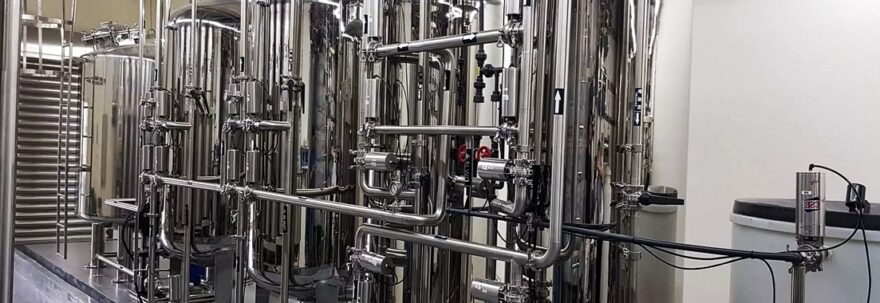

Water restrictions are reshaping plant operations across northern Mexico. Learn how stainless steel 316/L is becoming a key ally in overcoming this industrial challenge.
Galería del Artículo:
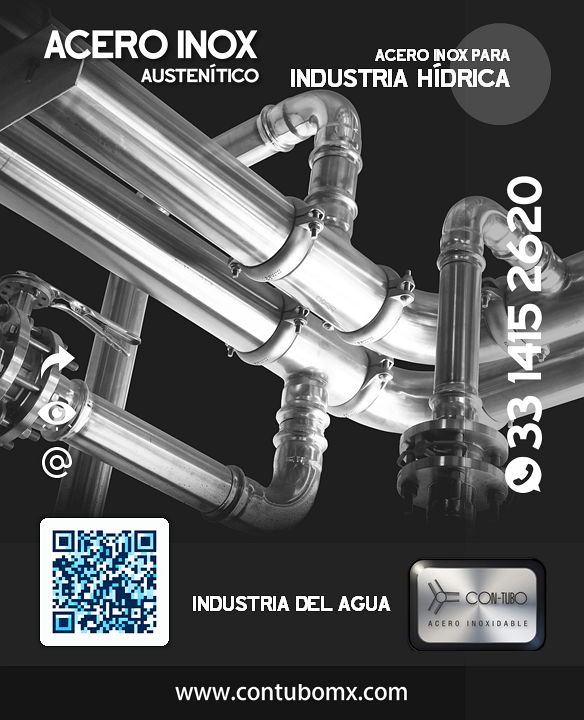
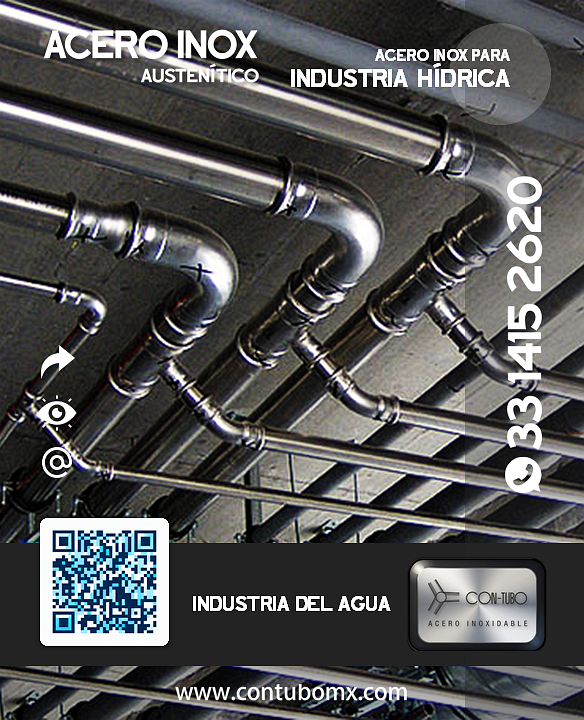
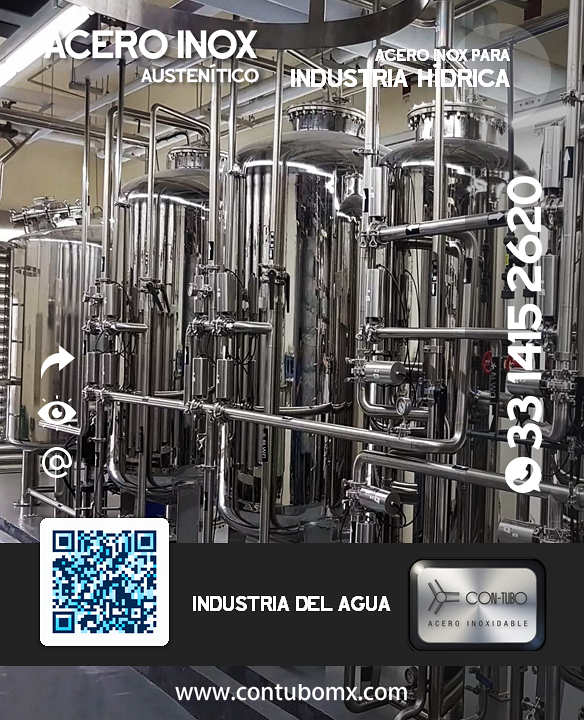
Stainless steel: A key alternative for adopting mitigation and adaptation strategies that guarantee operational continuity
Water scarcity in northern Mexico, particularly in states like Nuevo León, Coahuila, and Chihuahua, has begun to critically impact various manufacturing industries. This crisis has been worsened by a combination of factors such as accelerated urban growth, prolonged droughts, overexploitation of aquifers, and deteriorating hydraulic infrastructure. Given this scenario, companies in the industrial sector must implement mitigation and adaptation strategies that ensure operational continuity and reduce environmental impact.
In this context, selecting appropriate materials for industrial facilities is crucial. Water treatment, reuse, and distribution systems require components that withstand extreme conditions of humidity, chemicals, and temperature without compromising hygiene or system integrity. This is where stainless steel, particularly in its 316/L alloy, becomes a technically and economically viable option in the medium and long term.
Impact of the Water Crisis on the Manufacturing Industry
Manufacturing industries in northern Mexico heavily depend on water for various processes: machinery cooling, raw material washing, steam generation, and product transport through pipelines. Water supply cuts and rationing have forced many companies to temporarily shut down operations, leading to significant economic losses, contract breaches, and labor tensions. In sectors such as automotive, metal-mechanical, and food and beverage, these disruptions affect both national and international supply chains.
In addition, regulatory agencies have tightened requirements on responsible water use, demanding reports, efficiency plans, and the implementation of recirculation or treatment systems to reduce net consumption. In response, many companies have opted to implement greywater reuse technologies, internal treatment plants, or CIP (Clean-in-Place) systems to minimize waste.
Role of Stainless Steel 316 in Demanding Water Environments
Stainless steel 316/L is known for its high corrosion resistance in aggressive environments, including saline, acidic, or chlorine-containing solutions. This makes it ideal for industrial processes where water may be contaminated with chemical compounds or where there’s prolonged exposure to moisture or vapor. Its low carbon content in the 316L variant further enhances its weldability and performance in critical applications such as the food, pharmaceutical, and chemical industries.
Compared to materials like carbon steel or industrial-grade PVC, stainless steel offers greater durability, reduced maintenance, and a significantly longer service life, making it a sound investment. It is also compatible with international hygiene and sanitization standards, making it a suitable choice for facilities that must comply with certifications such as ISO 22000, FDA, or NOM-251.
Recommended Applications of Stainless Steel 316 in Times of Water Scarcity
- Piping and manifolds for process water distribution.
- Heat exchangers in closed-loop recirculation systems.
- CIP cleaning systems in food and beverage plants.
- Chemical treatment tanks and reactors.
- Reverse osmosis and wastewater filtration systems
Real Case: Water Adaptation in a Beverage Plant in Monterrey
A well-known bottling plant located in Apodaca, Nuevo León, implemented an integrated water treatment system to cope with supply cuts during the summer of 2024. The project included rainwater harvesting, filtration, storage, and redistribution for processes such as cleaning, cooling, and line sanitization. To ensure system hygiene and reduce corrosion risk, stainless steel 316L pipes, valves, and fittings were installed throughout the circuit.
Thanks to this investment, the plant reduced its dependence on municipal water by 40%, maintained active production, and received environmental recognition from the state government. This case illustrates how the proper selection of materials can make the difference between halting operations or remaining competitive during a water crisis.
Technical Specifications of Stainless Steel 316/316L
Typical chemical composition:
- Chromium (Cr): 16.0 – 18.0%
- Nickel (Ni): 10.0 – 14.0%
- Molybdenum (Mo): 2.0 – 3.0%
- Carbon (C): Max 0.08% (316) ≤ 0.03% (316L)
- Iron (Fe): base metal
Applicable standards:
- ASTM A312 (pipe)
- ASTM A403 (welded fittings)
- ASME B16.5 / B16.9 (flanges and accessories)
- ISO 1127 / EN 10217 (complementary European standards)
CON-TUBO: Technical Supplier for Water and Industrial Challenges
At CON-TUBO, we understand that reliable and efficient water supply is essential for the continuous operation of our clients. That is why we offer comprehensive solutions in stainless steel 304/304L and 316/316L with strict technical specifications, full traceability, international certifications, and immediate availability from our distribution centers in Guadalajara and Mexico City. We maintain inventory in various dimensions and finishes, enabling us to supply industrial water reuse, treatment, or distribution projects with speed and reliability. Contact us today to request a quote. In times of scarcity, the best investment is in prevention and efficiency; stainless steel is a key step in that direction.
Technical Glossary:
CIP (Clean-In-Place)
An automated cleaning system used to clean the interior of pipes, tanks, and equipment without disassembly. Common in food, pharmaceutical, and beverage industries. Compatible with stainless steel 316/L.
Stainless Steel 316/L
An alloy of stainless steel with molybdenum, ideal for corrosive environments. The 316L version has low carbon content, improving weldability and resistance in sanitary applications.
ISO 22000
An international standard that outlines requirements for a food safety management system across the supply chain. Requires hygienic, traceable, and cleanable materials.
FDA (Food and Drug Administration)
The U.S. agency that regulates food and drugs. Its standards define which materials are safe for food contact. Stainless steel 316/L complies with these specifications.
NOM-251-SSA1-2009
Official Mexican standard establishing hygiene practices for food and beverage processing. Requires the use of corrosion-resistant, washable, and non-toxic materials like stainless steel.
Manifold (Collector)
A component used to distribute or collect fluids across multiple process lines. Allows centralized flow control in production systems. Often made of stainless steel in sanitary environments.
ASTM A312 / A403
International standards specifying technical requirements for stainless steel pipes (A312) and fittings (A403) used in industrial processes.
Traceability
The ability to identify the origin and complete path of a product or component throughout its supply and transformation chain. Key in regulated sectors such as food or pharmaceuticals.
Contact us to learn about stainless steel solutions for the water industry.
316/L stainless steel piping and components: ideal for industrial water reuse, treatment, and distribution. At CON-TUBO, we have the solution. Contact our sales team for a no-obligation quote.
More Info:
Obtenga los mejores productos de Acero Inoxidable 304 y 316 en: Contubomx.com