
In many industrial projects, the same question comes up when inspecting a batch of pipe: the measured wall thickness does not exactly match the value shown in the table. This often leads to concerns about whether the material is out of spec or if there was a manufacturing issue.
When it comes to stainless steel pipe under ASTM A312, the answer is not as simple as comparing one number to another. To properly interpret dimensions, it is essential to understand how three technical references interact: ASTM A312, ASME B36.19, and ASTM A999.
When analyzed together, the picture becomes much clearer.
Article Gallery: Certified Distributors of Stainless Steel Tubes in Mexico.
What Does ASTM A312 Actually Define?
ASTM A312/A312M is the standard specification for austenitic stainless steel pipe, both seamless and welded. It covers grades such as TP304, 304L, TP316, and 316L, which are widely used in food processing, pharmaceuticals, chemical plants, energy, and general process industries.
This standard defines key aspects such as chemical composition, mechanical properties, required testing, manufacturing methods, and delivery conditions.
However, when it comes to dimensions like outside diameter and wall thickness by schedule, ASTM A312 does not provide its own dimensional tables. Instead, it refers to ASME B36.19, which establishes the standard dimensions for stainless steel pipe.
For example:
- NPS 6 Schedule 40S has a nominal wall thickness of 0.280 inches
- NPS 8 Schedule 10S has a nominal wall thickness of 0.148 inches
The key word here is nominal.
Nominal Thickness Does Not Mean Exact Thickness
In material inspection, it is common to assume that the value listed in the table must be met exactly at any point on the pipe. In engineering, however, “nominal” has a different meaning.
A nominal thickness is a reference value used for design, structural calculations, and schedule classification. It is not an absolute measurement without variation.
All industrial manufacturing processes involve small variations. In seamless pipe, rolling and drawing processes influence thickness. In welded pipe, forming and welding introduce additional variables. These variations are normal and expected within the standards.
This is where ASTM A999 becomes relevant.
ASTM A999 and Dimensional Tolerances
ASTM A312 explicitly incorporates the general requirements of ASTM A999/A999M. This standard defines the dimensional tolerances applicable to stainless steel pipe, along with other general supply conditions.
ASTM A999 is not optional. It is a fundamental part of the technical framework that complements ASTM A312.
Regarding wall thickness, ASTM A999 recognizes that the listed value is nominal and allows for variations within acceptable limits. In practice, for many diameters and thickness ratios, these variations are typically around +20% / -12.5% relative to the nominal thickness, unless stricter limits are specified contractually.
This means that a pipe with a nominal thickness of 0.280 inches may show slightly lower measurements in certain areas and still comply with the standard, as long as it remains within the permitted tolerance range.
The key is not comparing against the nominal value alone, but against the applicable tolerance.
When Is a Pipe Actually Out of Specification?
A pipe is considered out of specification when it exceeds allowable dimensional tolerances, does not meet chemical composition requirements, fails to comply with the required mechanical properties, or does not meet clearly defined contractual conditions.
A single measurement that does not match the nominal value is not enough to declare nonconformity.
In many projects, especially in regulated sectors such as food, beverage, or energy, observations often stem from incomplete interpretation of the standards.
Understanding the relationship between ASTM A312 and ASTM A999 helps avoid unnecessary rejections and supports technically sound decisions.
ASME B36.19 and Stainless Steel Pipe Schedules
ASME B36.19 defines nominal wall thicknesses for stainless steel pipe. This is where designations such as 10S, 40S, and 80S originate.
The “S” indicates that these dimensions are specific to stainless steel, distinguishing them from carbon steel tables in ASME B36.10.
While some sizes may share similar nominal thicknesses, it should not be assumed that all schedules or designations are interchangeable without consulting the appropriate table.
For example, when specifying ASTM A312 TP316L NPS 8 Schedule 40S, you are combining a product standard, a dimensional standard, and a nominal thickness classification. All three must be interpreted together.
The Importance of Clear Specifications in Industrial Projects
If a project requires tighter tolerances than those defined in ASTM A999, these must be explicitly stated in the purchase order or technical specification.
Standards define the general framework. Contracts can impose stricter requirements, but those cannot be assumed unless clearly specified.
For project engineers, quality teams, and procurement departments, understanding this structure provides clarity when evaluating materials, raising observations, or approving deliveries.
In today’s industrial environment, where lead times and operational continuity are critical, proper interpretation of standards can prevent delays and unnecessary costs.
Conclusion
ASTM A312 defines product requirements in terms of material and performance.
ASME B36.19 establishes nominal dimensions by schedule.
ASTM A999 defines the tolerances that allow those dimensions to be correctly interpreted.
Together, these standards form a consistent system.
Nominal thickness is a design reference. Controlled variations are part of the manufacturing process and are fully recognized by the standards.
Understanding this interaction not only strengthens technical evaluation, but also improves decision-making in any project where stainless steel piping plays a critical role.
At CON-TUBO, we understand the importance of proper standards interpretation and support our clients in making informed technical decisions. Working with a supplier that understands these criteria makes a measurable difference.
Gallery: We are specialist distributors of Austenitic Stainless Steel Tubes.
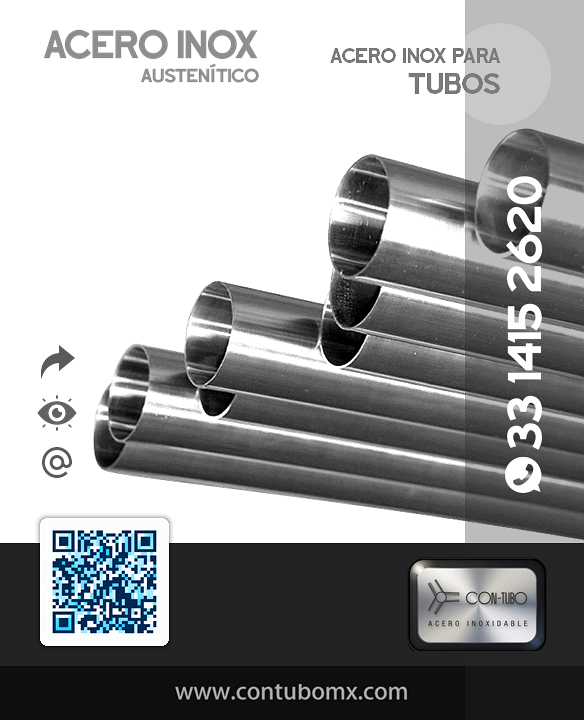
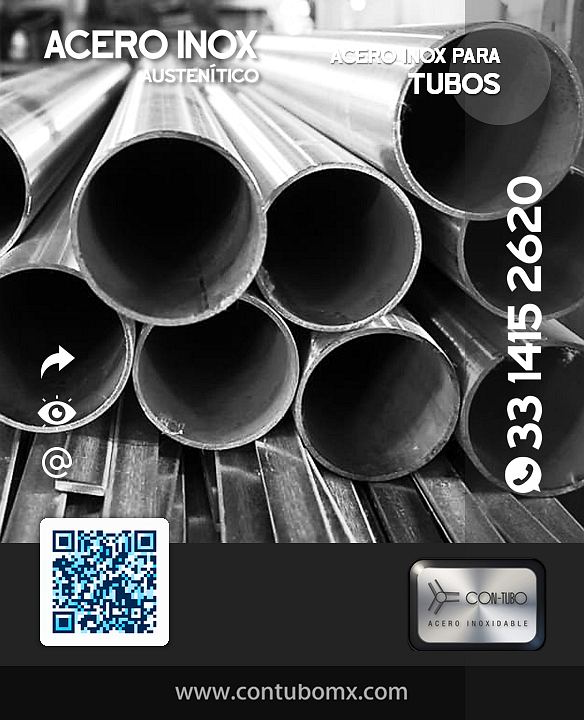
CON-TUBO, specialist in 304 and 316 stainless steel for the National Industry
If your company requires piping with accurate regulatory interpretation and support for informed technical decision-making, CON-TUBO has a strategic inventory and proven experience in the national market. Request your formal quote with clear technical specifications and trust the most specialized supplier of stainless steel for industrial processes in Mexico.
More information at:
Get the best 304 and 316 stainless steel products at: Contubomx.com